
In September we held our first event for the Retrofit For All project with London School of Economics Housing and Communities at the National Communities Resource Centre at Trafford Hall. The event brought together housing providers, contractors, policy makers, and tenants to gain insights about their experience of people-centred approaches to retrofit through publicly funded schemes and to review Carbon Co-op’s initial Retrofit for All Toolkit. This blog covers reflections from the event and learnings for the project moving forward.
What is ‘people-centred’ retrofit and why is it important?
A people-centred approach to retrofit involves designing energy efficiency schemes so that the needs of residents are at their core. This is to ensure both warm, healthy homes and affordable energy bills for tenants at the same time as reducing fuel poverty and carbon emissions. The Retrofit for All toolkit developed by Carbon Co-op in 2021 provides guidance for scheme managers (such as local authorities, housing associations or contractors) as to how to take people-centred approaches to make retrofits more accessible for energy vulnerable people.
The aim of the event was to facilitate conversations about the people-centred approach to retrofit and review how well the toolkit currently works to do this. It was important to gain this perspective and how this works to meet the needs of tenants from those who work on the scheme, those who influence policies around energy efficiency schemes and tenants themselves.
The participants at the event agreed that not only is a people-centred approach the right thing to do, but it will also deliver more successful retrofit schemes through honest communication and building trust with tenants. Discussions also highlighted that there are risks associated if tenants are not engaged throughout the retrofit process as projects are often invasive and disruptive. This can lead to high refusal rates and missed targets. Therefore, tenant goodwill is crucial to the success of projects. However, currently social housing retrofit is geared towards the needs and requirements of the funder rather than tenants. Placing emphasis on the quantity of properties retrofitted and the associated costs leaves little resource or budget for effective engagement.
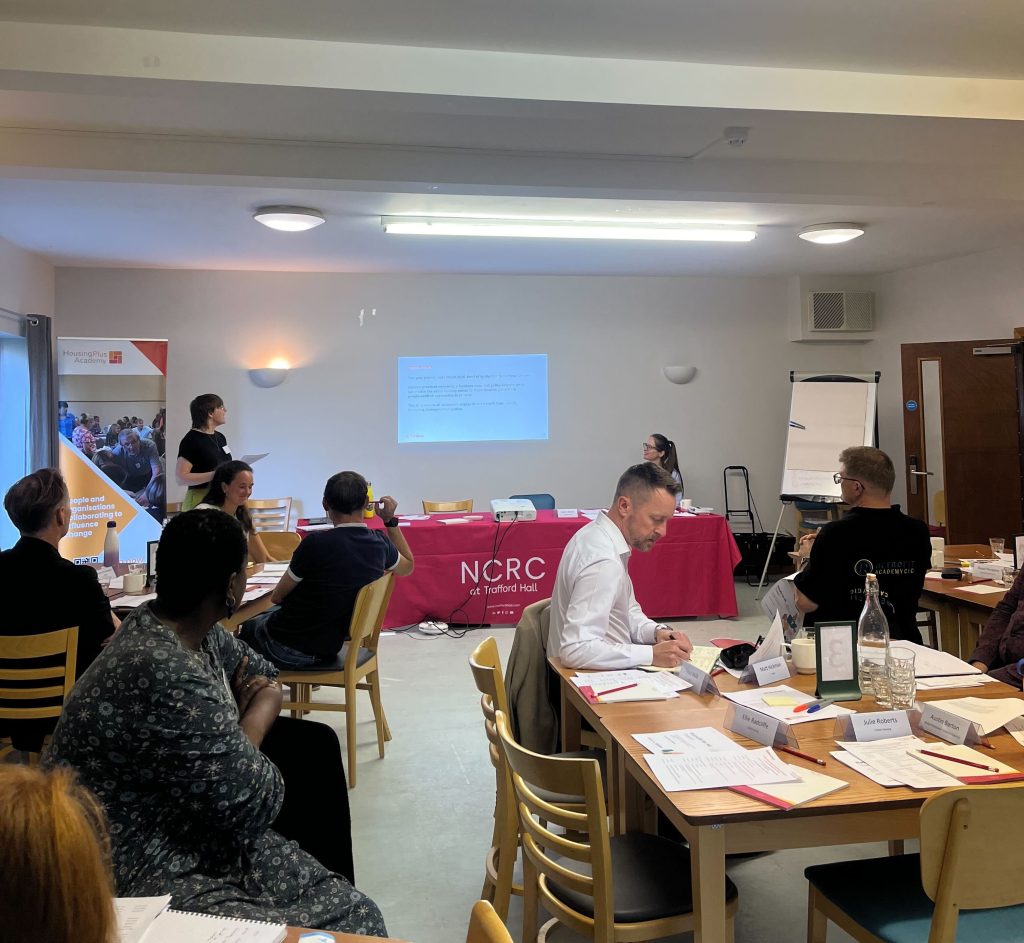
Introduction to the Retrofit For All Toolkit
People vs. process
Retrofit is not simply being done to a building, it is something being done for and with people and their homes. Where publicly funded schemes, such as the Social Housing Decarbonisation Fund (SHDF) offer financial support to social housing providers to implement measures such as insulation, heating system upgrades and renewable energy installations, it is important to engage with people to know what proposed work will mean for them and the way they live.
‘Retrofit is not simply being done to a building, it is something being done for and with people and their homes’
However, the discussions at the event highlighted that current processes for SHDF expect housing providers to be able to hit the ground running when receive funding and create a limited delivery time frame. The participants found this puts the needs of the funder at the centre of the process because there is limited time to engage with tenants prior to starting the work and limited opportunities to support resident engagement throughout. At the event we heard from organisations who are working to build a people-centred approach and look to recruit tenants and people within the local area to be a point of contact within the community for tenants. Roles such as resident liaison officers play a vital role in building a relationship with tenants to make sure there is access to properties and tenants have a good understanding of the process.
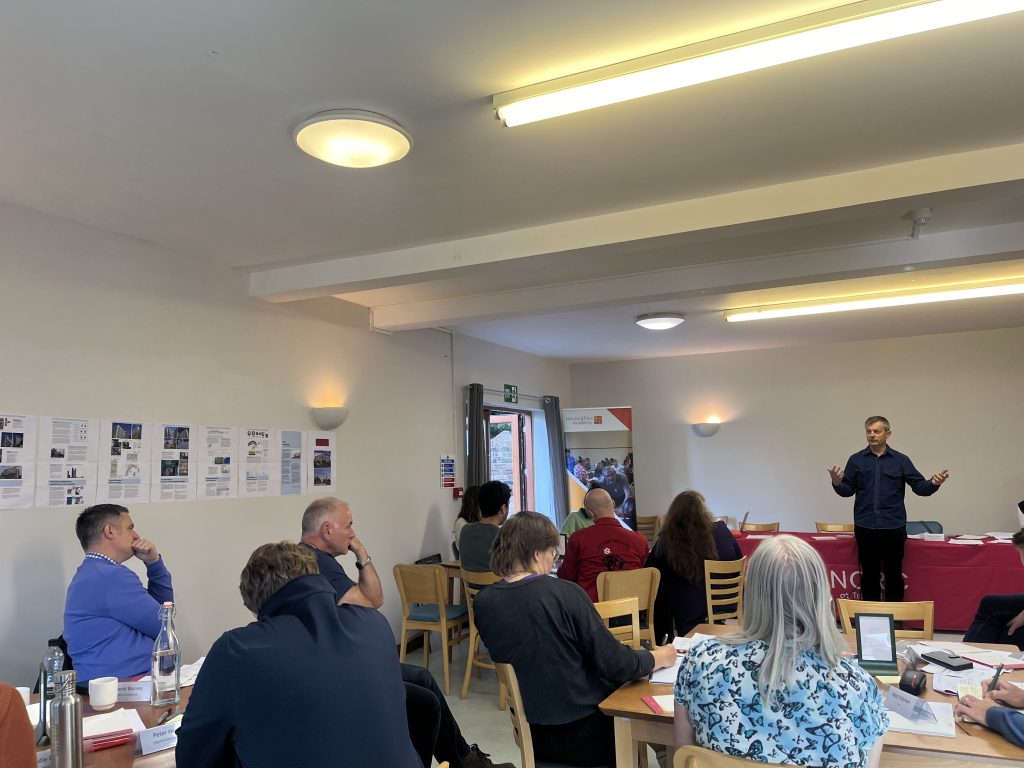
Other challenges were highlighted around the engagement from contractors working on these projects. Where there is already a lack of contractors within the industry with the skills to carry out retrofit, it was suggested that sometimes contractors lack the softer people skills to engage with tenants. This is crucial to build trust. Some participants also suggested that the culture of the organisation applying for funding will shape how tenant centred the approach is to retrofitting social housing. If housing providers have a strong culture of engagement with their tenants this will be emphasised at the bid stage, whereas if they have poor communication and their approach may not be as effective this will play out in any applications too.
The tenant experience
At the event, tenants shared their experiences with retrofit works. This brought to light the real challenges that come when tenants are not engaged with effectively, and the emotional and mental impacts the process has when expectations are not managed and in some cases their homes disrespected. Tenants often feel ‘experimented on’ as they already feel a sense of less control over major decisions made about their home and it feels like retrofit is done ‘to them’ rather than ‘with them’.
Where there is already distrust around the net zero agenda and new technologies such as heat pumps, it was suggested that using buzzwords, such as ‘net zero’, ‘retrofit’ and ‘decarbonisation’ create barriers for tenants to engage with the process. When undertaking retrofit, terms that are not commonly used or understood by the public should not be used. Instead, residents should be engaged with creating warmer and healthier homes and reducing the cost of energy bills.
What is currently being done?
A session was held at the event to share valuable insights gained from case studies of people-centred retrofit. We heard from ECD Architects who worked on Wilmcote House in Portsmouth, where community engagement was a major theme throughout the project. Residents were consulted on the refurbishment proposals throughout a series of resident open days and feedback sessions, with dialogue being maintained throughout the building works. With residents in-situ, this project showed what can be achieved when taking a fabric first, people centred approach. Research carried out by LSE with residents during and after the works showed the council’s Resident Liaison Worker provided a vital line of communication with residents and was strongly praised by them.
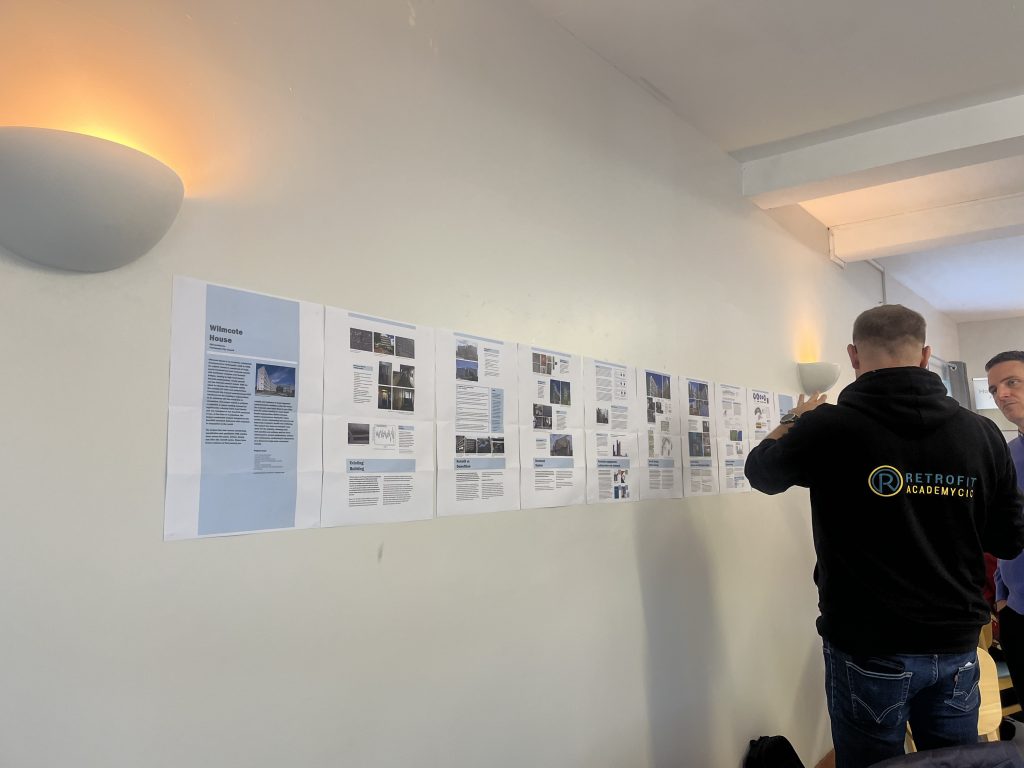
Wilmcote House Case Study
National Energy Action (NEA) highlighted the work they have been doing since 2020 following the disastrous retrofit scheme at Fishwick in Preston under the Community Energy Saving Programme (CESP) scheme in 2013. The scheme should have helped people following external wall insulation, but made it worse by developing severe damp and mould issues.
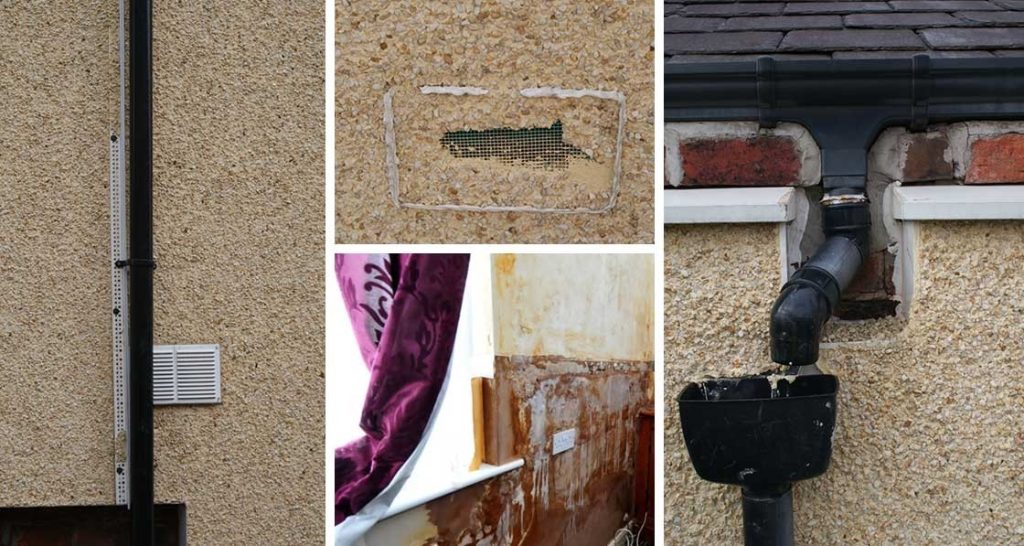
Fishwick, 2013
In 2020, NEA began working closely with residents to design and deliver a project that avoids the mistakes of the past, rebuilding trust and restoring hope. Despite a lot of initial mistrust from residents, they have repaired 45 homes so far. This has shown the importance of having a resident and community liaison for retrofit projects.
Learnings and discussions from this event have been very informative in understanding the perspective of key stakeholders within publicly funded retrofit schemes, the challenges currently faced and opportunities for change. This will feed into the next steps of redeveloping the Retrofit for All toolkit so that it can be used by social housing providers, contractors and tenants to both deliver and advocate for people-centred approaches to retrofit.
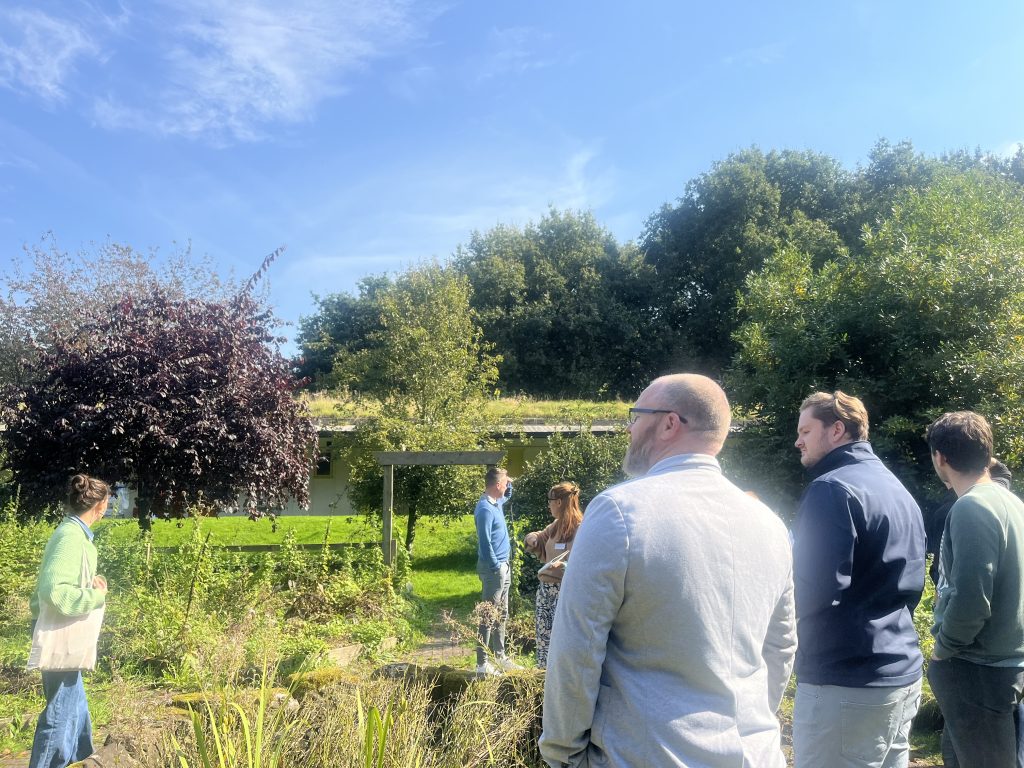
Tour of the Trafford Hall grounds