
Carbon Co-op’s area-based retrofit project is upgrading a group of homes in Levenshulme, South Manchester, aiming to improve energy efficiency, keep bills low and reduce carbon emissions. The initiative is also upskilling the local workforce. This article will explore the innovative training involved in this whole-house retrofit scheme.
Onsite Training
The key contractor for the retrofit scheme is Stockport-based company B4Box – both a contractor and a training provider with core values around local learners tackling poverty, addressing climate change, promoting social justice, and addressing inequality. B4Box were particularly attracted to the scheme because of the opportunity to upskill the local workforce, in line with their core values of addressing local poverty and inequality through training.
Michael Dickinson, Director at B4Box, says:
“The fact we could extend our collaboration with Carbon Co-op to not just look at building retrofit works but also think about the training opportunities from the collaboration was a really exciting factor.”
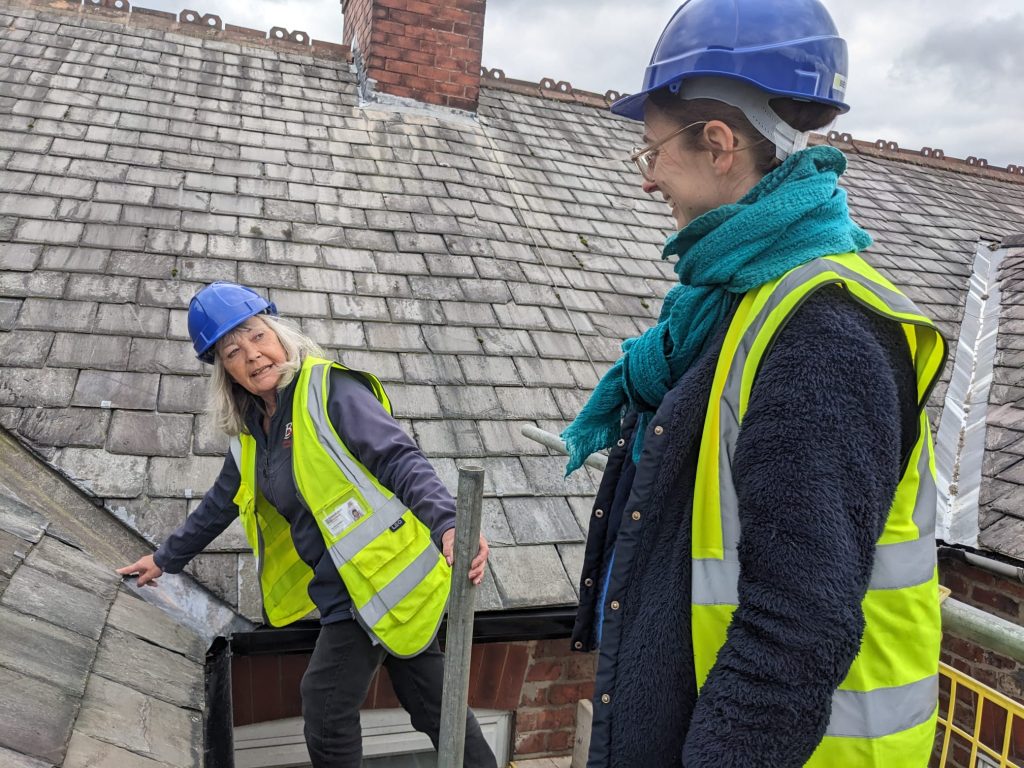
With this dual role, B4Box are developing hands-on training alongside the work’s delivery. Michael explains how this works: “We employ three trainers who spend time onsite with the operatives. It helps the trainers, because they’re keeping their industry skills state-of-the-art and they can feed it back in their training to others. Crucially, they can help if we’ve got operatives who are beginning to utilise skills for the first time on a retrofit job, they can be alongside them and work with them.”
Funding and Qualifications
This level of guided practical training is made possible through a financial grant from the MCS Foundation, a charity supporting the decarbonisation of UK housing. In addition to research and advocacy, they champion schemes that expand the skills-base of the retrofit sector.
Retrofitting five Victorian homes involves a range of interventions, from fitting triple-glazed windows and doors to heating and ventilation systems. With the properties involved all being traditional Victorian terraces, the Level 3 Award in Energy Efficiency for Older and Traditional Buildings was selected as an appropriate qualification for the building pathology knowledge required. With sufficiently qualified trainers, B4Box have now become accredited to provide this qualification. They have already helped seven of their 65 operatives to complete the award, with another eight currently working towards completion.
“We’ve been able to work with the contractor and their employees to develop training that is relevant to the scheme and will help them upskill.”
Sophie Norton, formerly Carbon Co-op
Real-time Model
Training for similar qualifications is often limited to two or three consecutive days in the classroom. By contrast the model employed here is to have one day in the classroom, followed by a couple of weeks working onsite, before returning to the classroom for a day. This real-time model gives time for understanding to be bedded in on site, while providing a space for workers to ask questions, reflect and discuss what they have been working on.
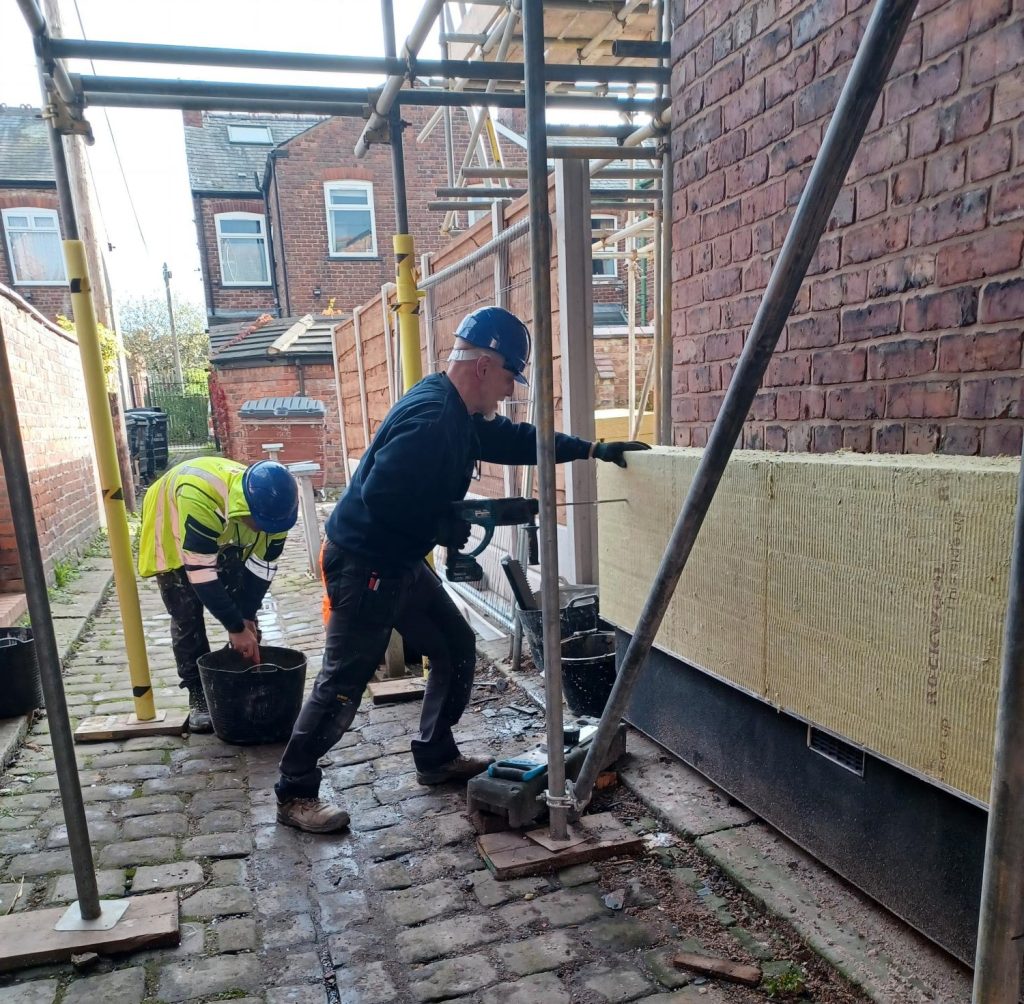
This bold approach, integrating experience into formal qualifications, is designed to address the preferred learning styles of operatives and the complex requirements of retrofit. In theory, this focus on learning in the live environment should positively impact the suitability of retrofit measures. For example, older properties especially can hide unexpected challenges that require problem-solving. Rather than install a solution that might not be the best for that building down the line, the training model allows flexibility for operatives to pause and consider different approaches. Classroom training can focus on the issue as a learning point before going back to the site. In some instances, specialist manufacturers can come in to explain innovative products and processes.
Longer-term impacts are still to be assessed, while this pilot scheme continues to be delivered – but immediate impacts are already being realised in the form of substantial capacity building and upskilling which have the potential to create a valuable and sustainable legacy.
“We see this as a key element of the project, bringing extra value and impact in terms of supporting the development of a skilled and knowledgeable workforce in retrofitting. Something which is increasingly relevant in a world looking to achieve Net Zero by 2050.”
Catherine Simmons, Carbon Coop Project Manager
Thanks to Harlow Consulting, the authors of this blog.
