
Introduction
The pilot Area-Based Retrofit scheme in Levenshulme, South Manchester has been designed to trial the benefits of a localised approach to retrofit works. The idea is to enable multiple nearby properties of the same type to ‘retrofit’ their homes, which means making domestic upgrades and installations that improve the energy efficiency of a property. As an innovative approach, it requires a feat of collaboration to successfully engage both householders and professionals, facilitate the design of the works together, all while upholding quality and trust. This article will investigate the collaborative nature of the project at all stages, leading to useful considerations for the design of similar area-based projects.
The project is enabled by Carbon Co-op acting as an intermediary party. This role creates very different relationships to those in most construction projects, and underpins the collaborative, community-focused approach. Carbon Co-op have negotiated financial support, led householder engagement, and liaised with professional parties who similarly value community participation and addressing climate change – architects Progress in Practice (PiP) and contractor B4Box.
Carbon Co-op’s intermediary role bringing all partners together and enabling the scheme delivery

Collaboration with Householders
The intermediary work of Carbon Co-op in establishing robust liaison with householders was essential, to overcome challenges and keep most householders committed both to their retrofit projects and the collective approach. Without this, this innovative pilot may have stalled. Building trust with householders is naturally the basis of a scheme such as this one.
The project used Carbon Co-op’s Retrofit for All toolkit to ensure householders are centred in the process, with agency over their homes and therefore satisfaction with the most appropriate output. For example, the works must be fit for purpose and financially appropriate, and take into account individual situations. The scheme can be said to be inclusive, accessible and community-led.
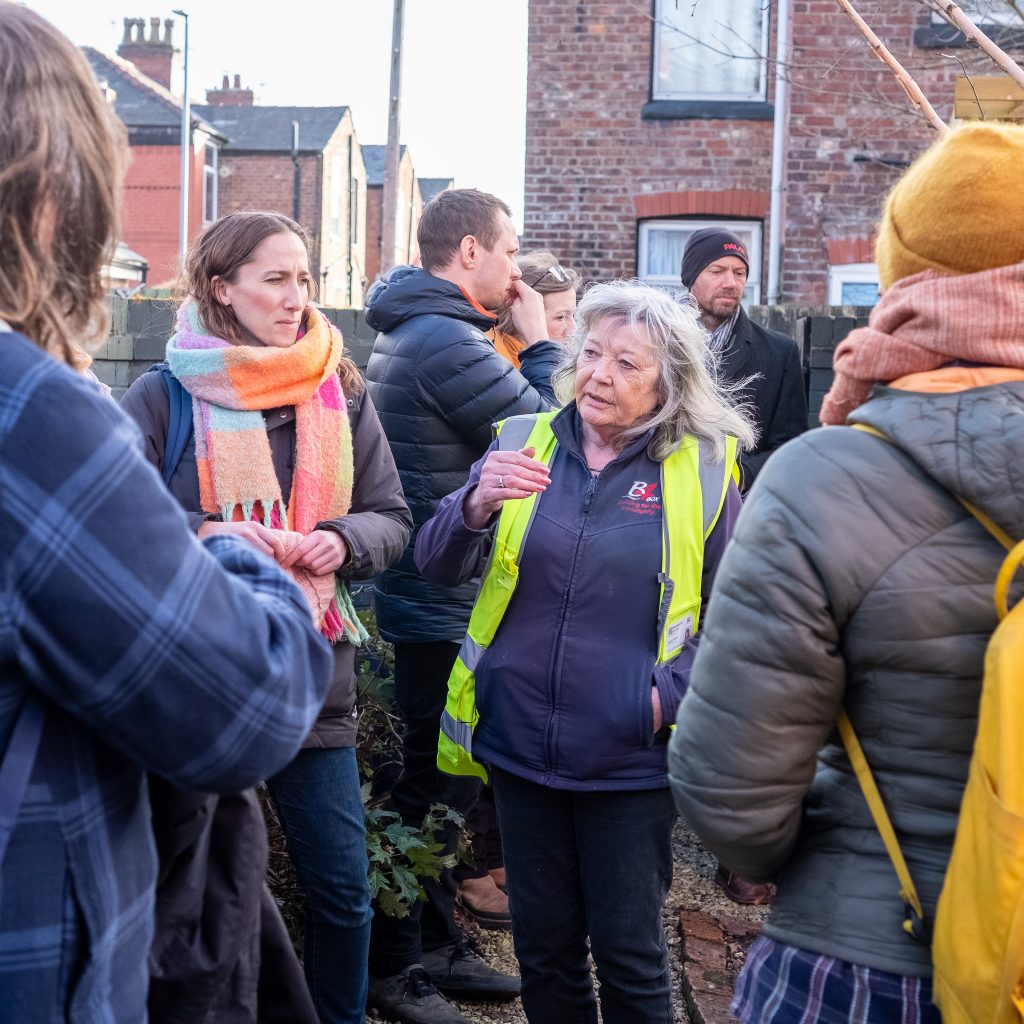
An important part of this collaboration was design workshops and meetings to discuss the details of the works, not shying away from the technicalities and practicalities of each building and customisation such as window and render colours. Participants were taken to a retrofitted home with similar works and were able to speak to the householder about their experience. The financial options supporting the scheme are also quite complex at first glance; the strategic team at Manchester City Council worked closely with householders to communicate the loan mechanisms.
The contracts were also developed in a thorough, involved manner. With the support of 500 words, the contracts employ accessible language, keeping legal speak to a minimum, and invite householders to get in touch if anything appeared to be incorrect. Carbon Co-op worked closely with householders to fully understood the detail of what they were taking on, including giving householders a chance to comment on the contract before it was finalised and change certain elements so that it worked well for both parties.

Contract with B4Box
B4Box are both a builder and training provider, who were particularly attracted to the scheme because of the opportunity to upskill the local workforce, in line with their core values of addressing local poverty and inequality through real time training.
The contract with B4Box was initially going to be the industry standard JCT (Joint Contracts Tribunal) contract. However, B4Box proposed a collaboration agreement, the idea being to form a contract that is less adversarial in nature. Carbon Co-op responded to this feedback by establishing a ‘Relational Collaboration Agreement’, again with support from 500 words to ensure that the wording was accessible to all. The contract sets a foundation for a positive working relationship, including a disputes resolution process and establishing a no-blame culture.
Challenges
Because this project required several parties working closely together in a novel way, one challenge is to determine distinct, functional roles and responsibilities for each party and communicate them effectively.
This is particularly challenging at the transitional points in the project, where Carbon Co-op especially have had to constantly evaluate their role. For example, the design stage requires the architects to be heavily involved, whereas at the on-site stage, the relationships naturally shift as the householders then interact with the contractor much more regularly than Carbon Co-op. From the householder perspective, these different relationships can lead to a sense of lacking control, so it is important for any group scheme to consider that sense of control throughout each stage of the project.
Additionally, Carbon Co-op invested into the scheme before any householders signed contracts. This was a financial risk until the contracts were signed, with the feasibility of the project heavily relying on the commitment of individuals without any guarantee of involvement. However, there is also a risk that signing contracts any earlier in the process might hinder accessibility. The risk could only be mitigated by establishing strong trust and communication, by respecting householders and responding flexibly to them so that they were likely to find the project suitable and commit to it. Carbon Co-op taking this risk may have also contributed to the sense of goodwill towards the project.
Conclusions
The ‘intermediary’ role of Carbon Co-op made this scheme possible, fundamentally with their engagement with local householders. Creating trusted relationships with each party can take time and resources, which should be considered as a part of any area-based project hoping to engage with householders and professional parties. A key learning for any facilitators of similar projects is the importance of allocating time and funding towards developing trust and rapport from the outset of the project and addressing any support households may need to engage with and remain in the project, to increase accessibility.
The unusually collaborative approach to the design and build process is easily seen in the bespoke contract which Carbon Co-op and B4Box worked on, with PiP named as contract administrator, sharing risk in an industry where relationships are often more adversarial in nature.
The success of the Levenshulme retrofit project, from the initial engagement with householders and potential contractors, to the development of contracts and the management of the design and build stages, has relied on collaboration.
Thanks to Harlow Consulting, the authors of this blog.
