
Authored by Dr Rowena Hay and Sabina Dewfield from Shortwork, with support from Helen at Carbon Co-op.
Project Heat Pump (Socialising Flexibility) was a two-year programme funded by Energy Redress and delivered by Carbon Co-op in partnership with Shortwork and Manchester City Council. The project explores how heat pumps are working in practice for social housing tenants, how households understand and engage with new heating technologies, and what potential exists for social housing to play a meaningful part in future flexibility markets. The project recognises that successful decarbonisation is not only a technical challenge but also a social one, shaped by habits, expectations, trust, and the day-to-day pressures tenants face.
Project Heat Pump was designed as a mixed-methods, participatory study combining quantitative monitoring data, qualitative insight, and lived experience. Our methodological approach was shaped by three principles:
- centring the experiences of social housing tenants,
- grounding findings in real-world practice, and
- generating evidence that is both rigorous and actionable for housing providers, policymakers and community organisations.
This blog – led by partners Shortwork – focuses on the role of tenants in the project – how they participated and how their input shaped some of the project outputs.
How and who participated?
During the discovery and develop phase of the project, tenants were involved in the following activities, led by Shortwork:
- In-depth tenant interviews: Exploring household perceptions, challenges, cultural practices and lived experiences of heat pumps.
- Participatory tenant workshops: Co-interpreting emerging findings with residents and co-developing user-friendly guidance and materials.
Tenants also completed doorstep surveys and a group of tenants opted in for home visits: these helped us to gather baseline household data on heating systems, usage patterns, thermal comfort and early experiences with heat pumps.
Making sure we heard from tenants with different needs and experiences was key. Sabina carried out 10 semi-formal telephone interviews with tenants with the sample including:
- families with young children
- retired people
- tenants with long-term health conditions
- tenants with disabilities.
Valuing time and expertise of participants
Across all our recent projects, including Project Heat Pump and Retrofit For All, fair remuneration has been central to how we work with tenants. While compensating people for their time is now more widely recognised as good practice, our experience shows why it is essential.
For us, remuneration is not simply a transactional payment for completing a survey or attending an interview. It is a commitment to recognising participants as knowledgeable partners whose lived experience directly shapes the quality, relevance and legitimacy of our work. It also recognises the careful thought, decision making leaps, and emotional labour involved in taking part.
We take care to ensure that people are not left out of pocket. This includes covering practical costs such as travel and childcare, as well as considering access needs, appropriate meeting locations and other logistical support. For some participants, this has meant arranging taxis or providing payments for home visits and extended engagement; for others, smaller honoraria for specific activities. In every case, our aim is to remove barriers to participation and make it possible for people to be involved equitably.
This period of work created an opportunity to consolidate and formalise our remuneration policies. By offering payment at every stage of participation, and by designing support around individual needs, we affirmed that tenants’ insights are not an add-on to the project but central to it.
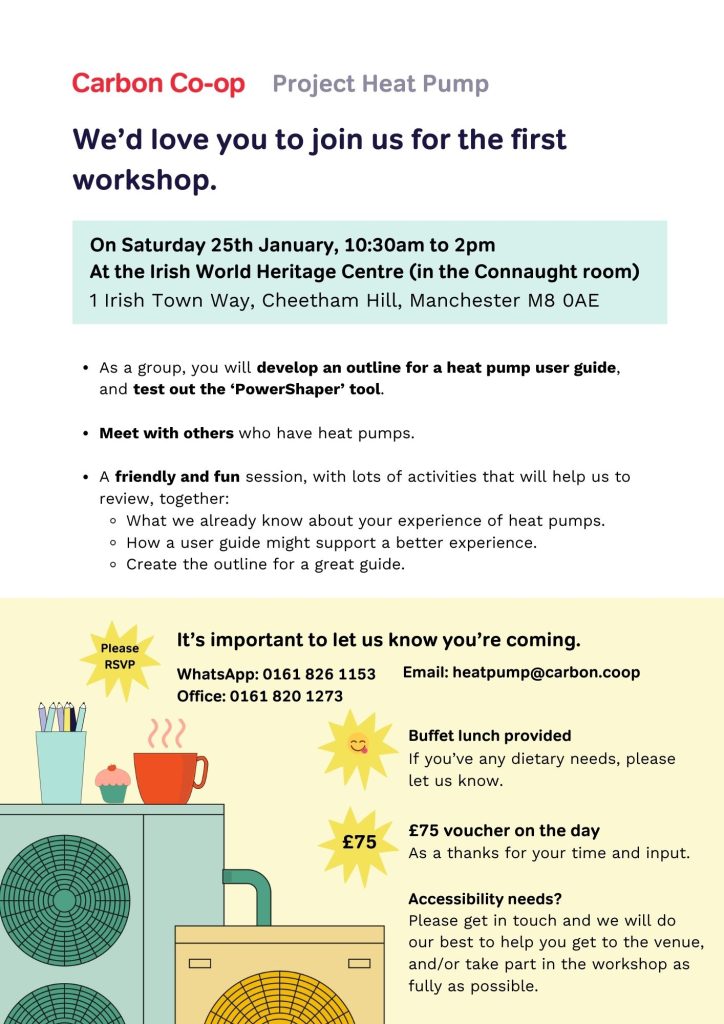
The flyer inviting tenants to our first workshop.
Participatory workshops
Insights from early research provided a clear rationale for the next stage. Tenants did not just need better technical systems; they needed better tools, explanations and resources that reflected their lived realities. We wanted to ensure that any advice, materials, or future support created through the project would be grounded directly in tenant experience.
The purpose of the workshops were twofold:
- To test and validate findings from tenant interviews: ensuring they reflected wider experience.
- To involve tenants directly in the co-design of practical solutions: particularly a tenant heat pump user guide.
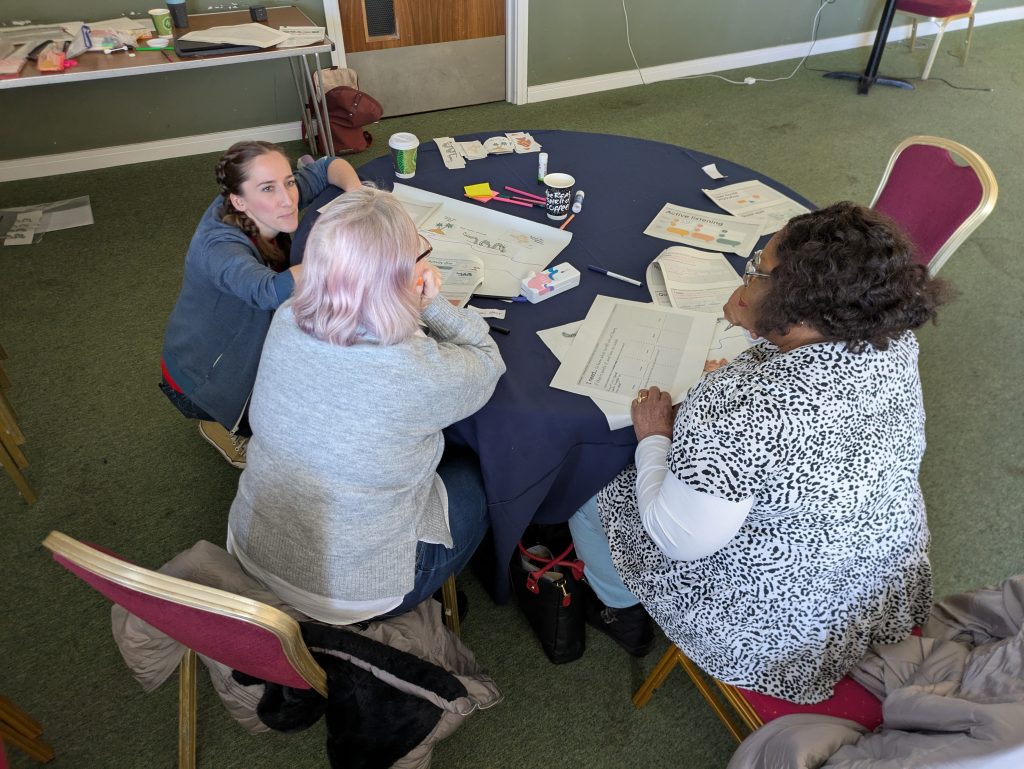
Eight tenants attended two in-person sessions. Using collaborative tools such as timelines, active listening, persona development and opportunity statements, participants compared their own experiences with the issues surfaced in the interviews and began shaping what better support could look like.

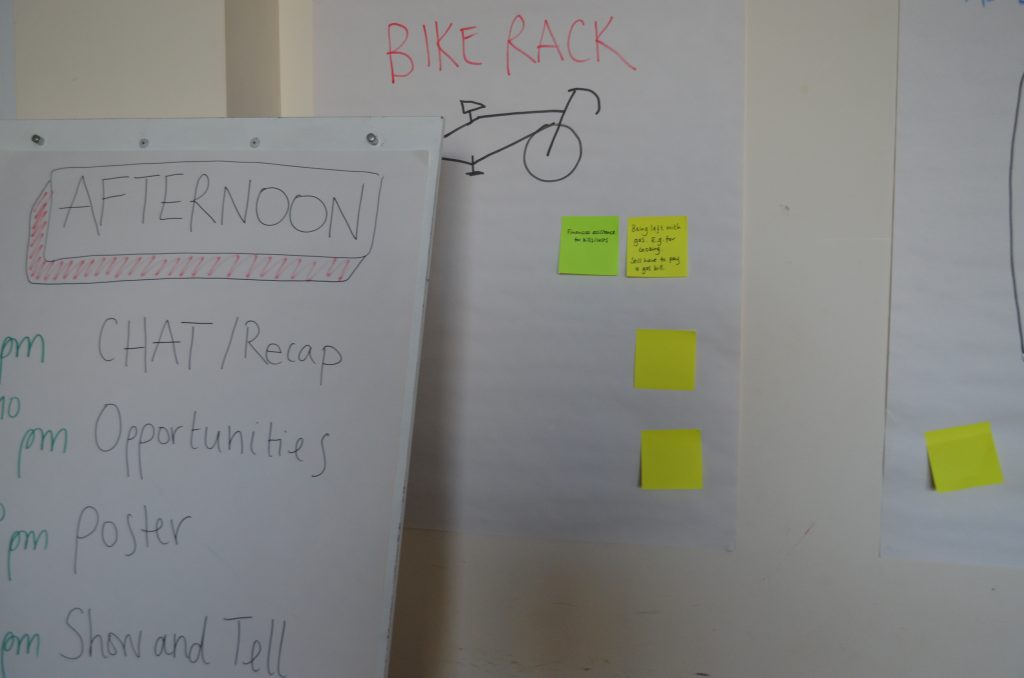
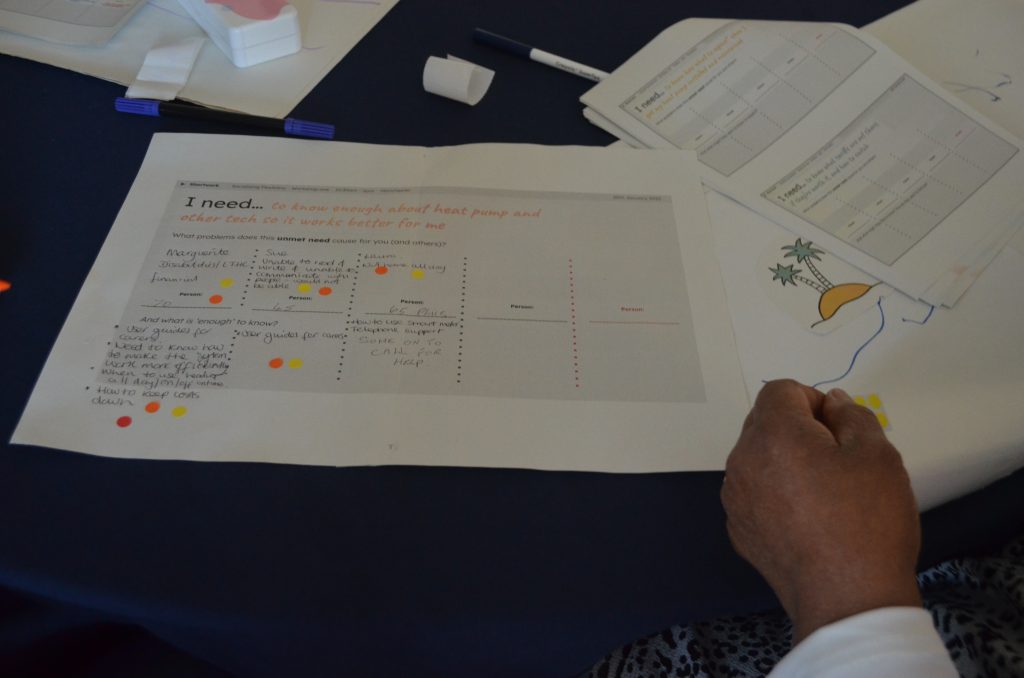
Co-designing the tenant heat pump guide
Participant involvement should not be shaped simply around highlighting problems – but about articulating what they need. This is what we heard in relation to heat pumps:
- A need for consistent, reliable information
- Explanations that match household realities
- Practical steps for staying warm affordably
- Clarity about installation, expected performance, and ongoing support
- Guidance tailored to different ability levels, literacy levels, and digital confidence.
Through persona creation, opportunity statements and visioning, tenants defined the features genuinely useful guidance should have, including:
- clear explanations of how heat pumps work
- practical advice on achieving warmth without overspending
- realistic expectations about installation and disruption
- step-by-step visual instructions
- simple language suitable for low literacy levels
- formats accessible to carers, older adults and those with disabilities
- offline and online versions
- early access to information before installation begins.
Tackling all of these things was beyond what we could do on Project Heat Pump alone, but they are important to state and share – critical things for the whole sector and supply chain to be doing more consistently, holistically and in integrated ways.
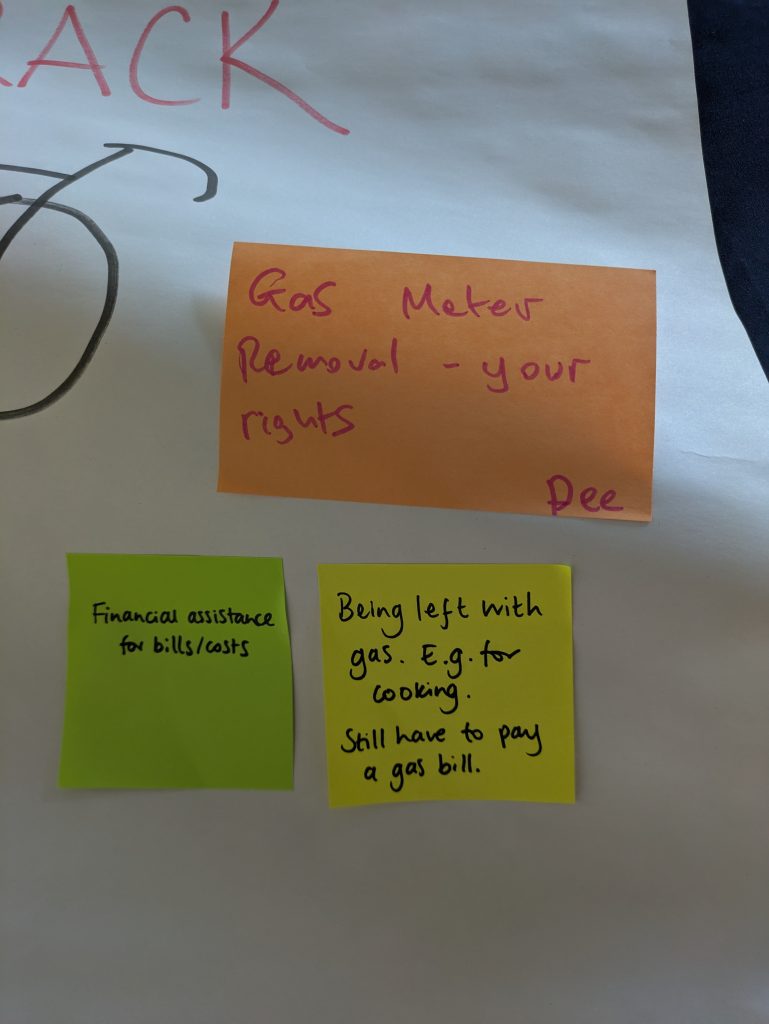
Ongoing co-design and refinement
A second workshop, again facilitated by Shortwork, focused on gathering detailed feedback from tenants on draft versions of the guide as it evolved. Tenants helped refine the clarity, tone, structure, visual layout and accessibility features, aiming for a final guide that is practical, trustworthy and usable for a wide range of households.
This iterative process – moving from interviews, to initial co-design, to real-world testing and refinement – has tried to ensure that tenants’ voices shaped the project at every stage.
Participation and co-design are fundamental if we are to develop heat decarbonisation in ways that are genuinely people centred. If you are not yet drawing on the lived experience of householders on your retrofit and heat decarbonisation programmes, then why not?
Carbon Co-op and Shortwork would like to thank all of the tenants who contributed to this project – this work would not be possible without them.
For more about Shortwork please visit www.shortwork.org.uk For more about Project Heat Pump (Socialising Flexibility) please visit our project page.